Legacy in Vienna: Creating lasting impact through meetings
Beyond economic value: Meetings that give back to the city
Vienna ranks among the world's leading meeting destinations - not only for its infrastructure and expertise, but for how it transforms global knowledge into local benefit. Business events in Vienna contribute significantly to the city's economy, supporting thousands of year-round jobs and generating millions in tax revenue. Yet the impact of meetings here reaches much further.
As part of its Visitor Economy Strategy "Optimum Tourism", Vienna aims to strengthen the social value of meetings through legacy initiatives that leave a tangible mark on the city and its people. The Vienna Convention Bureau (VCB) actively promotes and supports these efforts by helping organizers link their congress missions to local communities, education, health and sustainability projects. The goal: to create a "win-win-win" for organizers, the destination, and the people of Vienna.
Successful legacy projects have already been implemented in Vienna in the past, including with the European Renal Association (ERA) and the European Space Agency (ESA) in 2025.
Health meets action: The ERA Congress 2025
Display alternative text
Video ERA Congress 2025 in Vienna: Nephrology & Kidney Health
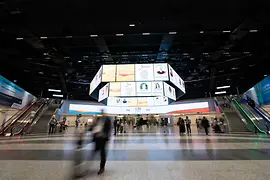
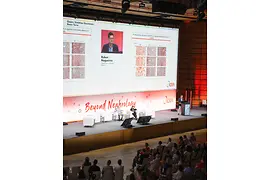
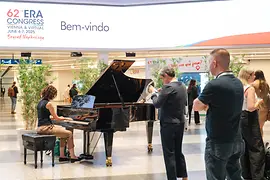
When the 62nd Congress of the European Renal Association came to Vienna in June 2025, it did so with a clear ambition: to make a difference well beyond the medical community. More than 9,000 participants attended on-site at Austria Center Vienna and online, exploring the theme "Game Changers in Nephrology" through cutting-edge science - and through projects that turned research into public action:
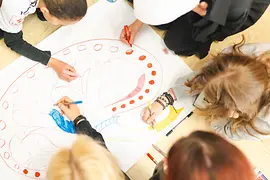
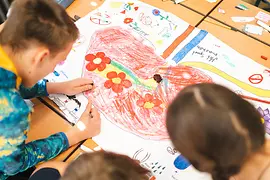
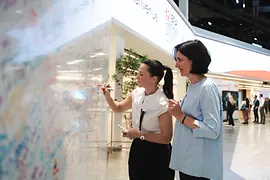
- Inspiring the next generation with The Kidney School Project: In cooperation with the Vienna Convention Bureau and local nephrologists, six school classes from three Viennese schools took part in the Kidney School Project ahead of the congress. Students learned about kidney function and prevention, then translated their knowledge into creative group artworks. The pieces were exhibited throughout the congress venue, sparking conversation between scientists and young citizens. One winning artwork, chosen by delegates, later graced the cover of a leading journal in the field. Each school received a €1,000 award to support further health-education initiatives - turning a classroom lesson into a lasting community investment.
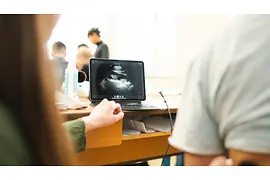
- Health for all - free kidney screenings: Over two days, a mobile kidney screening truck operated outside the congress venue, offering free health checks to the general public. The initiative, organized with the Austrian Society of Nephrology, invited Viennese residents and visitors to learn about kidney health, receive consultations and encourage early detection.
- DonauCleanUp project: A powerful symbol of ERA’s environmental and health awareness was its collaboration with DonauCleanUp, a volunteer initiative dedicated to removing plastic waste from the Danube. Linking the congress to Vienna's river underscored how human and environmental health are intertwined.

Science in the city: The ESA Living Planet Symposium 2025
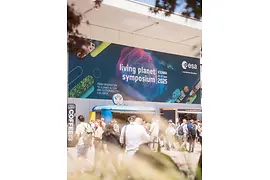
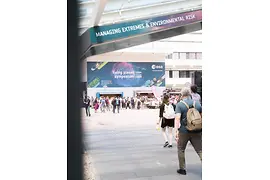
Later that same month, Vienna once again showed how science and society can meet in the heart of the city. The ESA Living Planet Symposium 2025, the world’s largest conference dedicated to Earth observation, brought more than 6,900 participants from 119 countries to the Austria Center Vienna.
Under the theme "From Observation to Climate Action and Sustainability for Earth", the symposium explored how satellite data can help tackle climate change, disaster preparedness and sustainable urban development. But its impact went far beyond the scientific sessions:
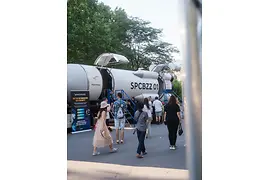
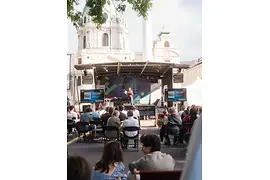
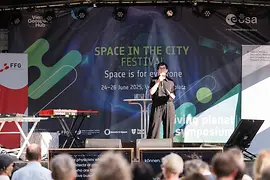
- "Space in the City" - opening the universe to everyone: For three days, Vienna's Karlsplatz became a vibrant open-air space lab during the public festival "Space in the City", curated and organized by UIV Urban Innovation Vienna GmbH and the Vienna Geospace Hub. The festival welcomed residents, families, and school groups to discover the world of satellite technology and space science through interactive exhibits, virtual missions, and creative performances. Austrian ESA reserve astronaut Carmen Possnig and space entrepreneurs shared personal insights into space exploration. Artists transformed satellite imagery into fashion and sound installations, while experts from ESA and the City of Vienna discussed how Earth observation supports climate-resilient cities.
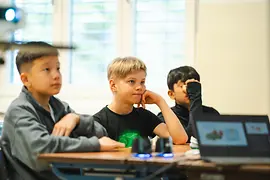
- Inspiring future scientists - the LPS School Lab: At the LPS School Lab, over 2,000 Austrian schoolchildren explored space science in hands-on workshops and live experiments. They learned how satellites monitor Earth's changing climate, and how data collected in orbit supports everyday life. The enthusiasm of these young visitors was a visible reminder that legacy begins with curiosity.
- Sustainable and inclusive by design: The symposium itself followed comprehensive sustainability and DEI (Diversity, Equity, Inclusion) principles: digital materials instead of print, eco-certified catering, accessible infrastructure, live subtitling, prayer and breastfeeding rooms, and on-site childcare. The result was an event that not only informed but embodied its values.
Vienna's legacy advantage
Events like the ERA congress and ESA's Living Planet Symposium illustrate how Vienna transforms congresses into catalysts for lasting value - where research meets responsibility and international collaboration meets local engagement.
By embedding sustainability, education, and citizen participation into the DNA of its events, Vienna ensures that every meeting contributes to both global progress and local well-being - setting a benchmark for what the future of meetings looks like: purpose-driven, inclusive, and truly impactful.
Contact the Vienna Convention Bureau team to learn how we can support your event with legacy initiatives.